
Those faint gray streaks running across a ceiling in weirdly geometric patterns — a grid, parallel lines, a smudged halo around a light fixture — have a name: ghosting. Some inspectors call it thermal tracking. Either way, it’s dust and soot sticking to the coldest spots on your walls and ceiling, and it shows up in straight lines because your framing is hiding right behind the drywall.
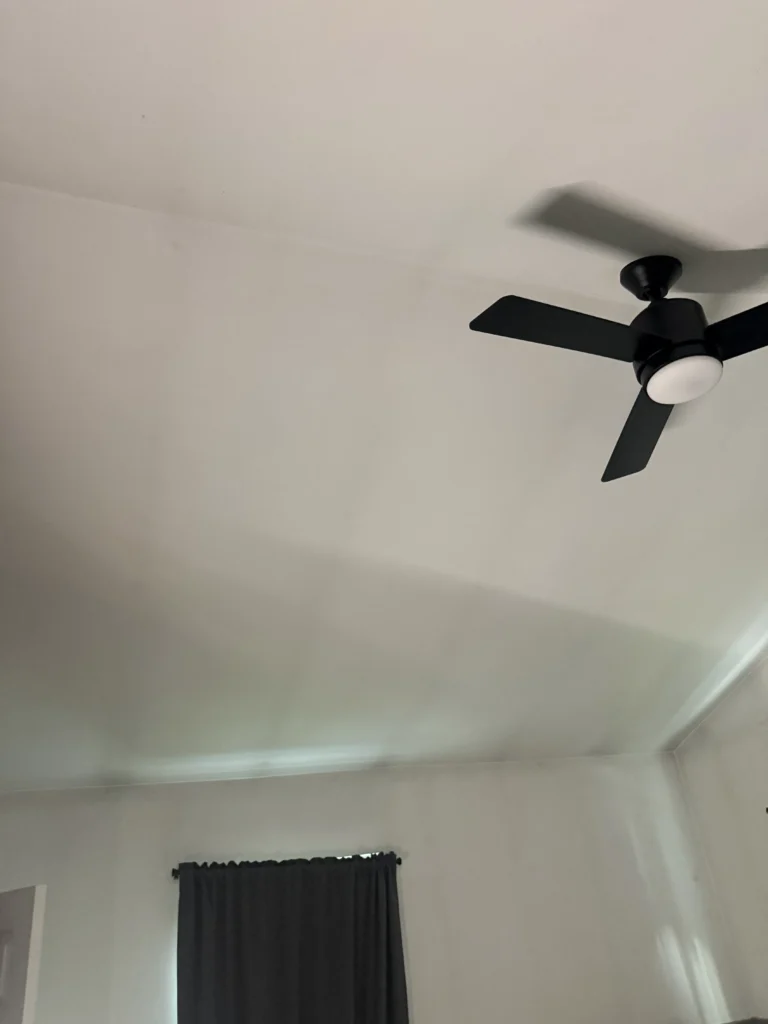
What’s Actually Happening
Studs, joists, and rafters conduct heat differently than the insulation packed around them. That mismatch creates a slightly colder strip of ceiling or wall exactly where the framing sits. Cold surfaces attract a bit of condensation, and condensation gives airborne dust and soot something to grab onto. Repeat that process for a year or two and you’ve got a stain shaped like your attic’s framing layout.
The same thing happens above vanity lights and baseboard heaters: warm air rises, carries dust with it, hits a cooler surface, and leaves a ring behind.
The Usual Causes
Candles are the top offender — even the “clean burning” kind releases fine soot that travels and sticks. Fireplaces, gas heaters, and neglected furnaces add to the pile. Thin or missing attic insulation widens the cold zones where particles collect. High indoor humidity speeds up how fast dust adheres to cold surfaces. And ordinary household dust — cooking residue, pet dander, everyday grime — supplies the raw material.
Ghosting or Mold?
Ghosting looks like a flat, even gray haze in crisp lines that match the framing above. Mold looks spotty and uneven, often with color — green, black, or brown patches instead of a uniform wash. A damp cloth will lift some ghosting (it comes back if the temperature issue stays unfixed); mold is stickier and usually comes with a musty smell.
The two can show up together, since the same cold-and-humid conditions that cause ghosting also invite mold. If there’s any sign of a leak, moisture intrusion, or an odor, get someone qualified to look before assuming it’s just ghosting.
Fixing It
A few changes make the biggest dent. Cut back on candles, or switch to cleaner-burning ones. Add insulation over the joists and rafter ties so the cold strips disappear. Keep indoor humidity under about 55% — bathroom and kitchen exhaust fans help here. Upgrade furnace filters or run an air purifier to reduce the dust supply. And if you’re repainting, use a stain-blocking primer first, since regular paint alone won’t hold back old ghosting for long.
FAQ
Is ghosting dangerous? No — it’s cosmetic, not a health risk. But it’s a sign your attic insulation needs attention, and in humid rooms the same spot can eventually grow mold.
Does cleaning it fix it for good? It removes the stain. The cold spot and dust source are still there, so it returns unless you fix the insulation or humidity behind it.
Does ghosting mean I have mold? Not automatically — they’re separate problems that happen to share a cause. If you can’t tell them apart from a photo, get a closer look in person.
Why does it always form in straight lines? Because it’s tracing something structural underneath — joists, studs, or rafters — that holds temperature differently than the insulation next to it.
Seeing Ghosting in Your Home?
If your ceiling or walls have those telltale gray lines, don’t just paint over it and hope for the best — the stain will bleed right back through until the insulation or humidity issue behind it gets fixed. Presidential Exteriors can inspect the affected area, pinpoint whether you’re dealing with ghosting, mold, or both, and handle the fix — from attic insulation upgrades to repainting with the right stain-blocking primer.
Give us a call or request a free inspection today, and we’ll help you get your ceiling looking like new — no ghosts required.